How to read a sewer camera inspection report
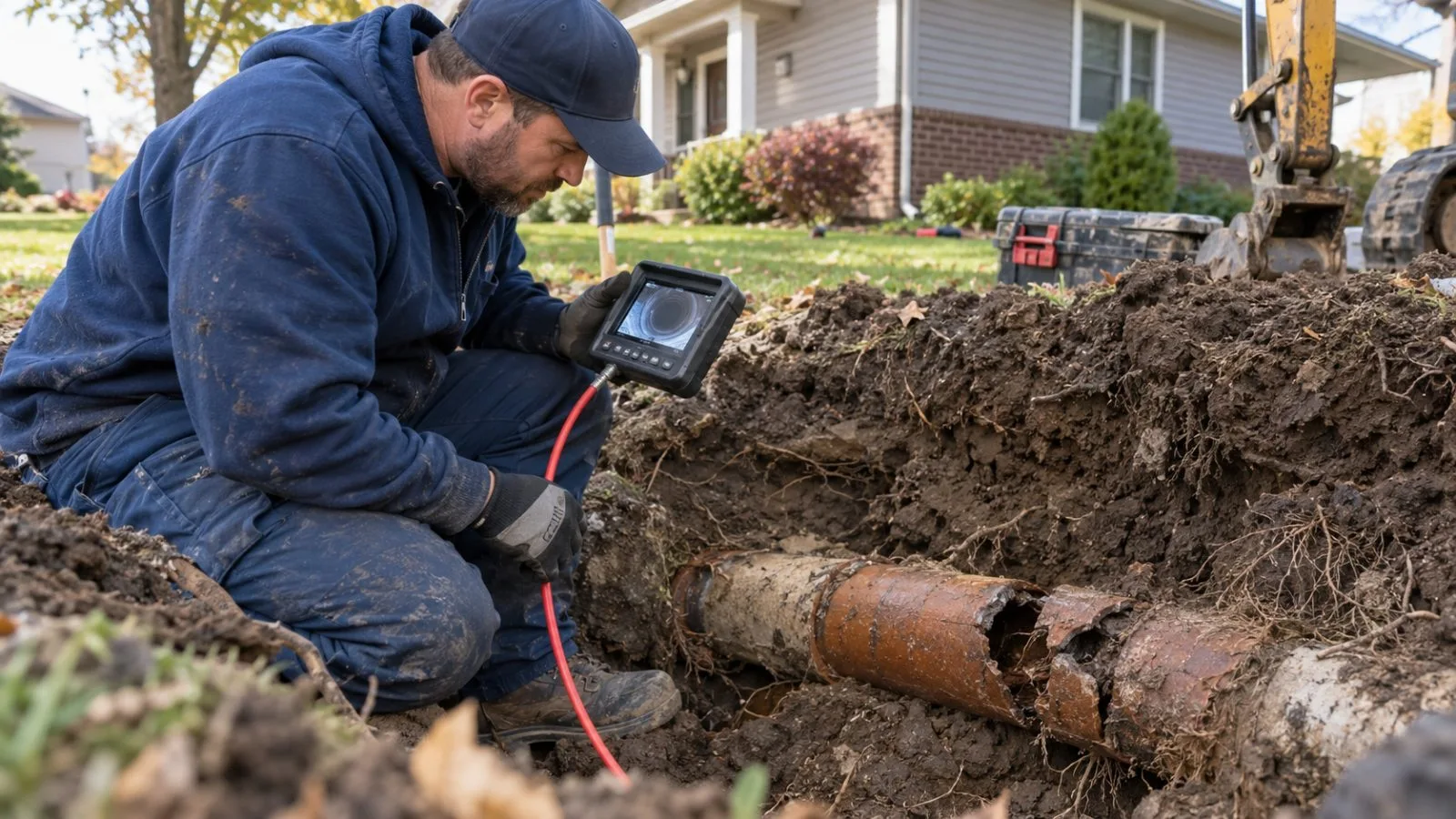
Read the start and end of the inspection before you read the repair recommendation. A picture of a broken joint matters much more when you know which pipe the camera entered, where the joint sits and how much pipe the operator saw beyond it. If a Fort Wayne estimate proposes excavation, ask the bidder to mark those limits on your copy of the report. For a new camera visit, The 2026 This Old House guide puts the national inspection range at $100–$500. Ask what a Fort Wayne provider charges for a report and a surface locate when you request an estimate.
A useful report lets another person retrace the inspection. You should be able to walk from the cleanout to the marked spot with the inspector, find the matching frame on the video and read a sentence that describes what failed. That gives you something concrete to send with an estimate request. For replacement budgeting, the cost guide sets out published national ranges and the items a local bid must price separately.
Find the entry point
Which opening did the camera use?
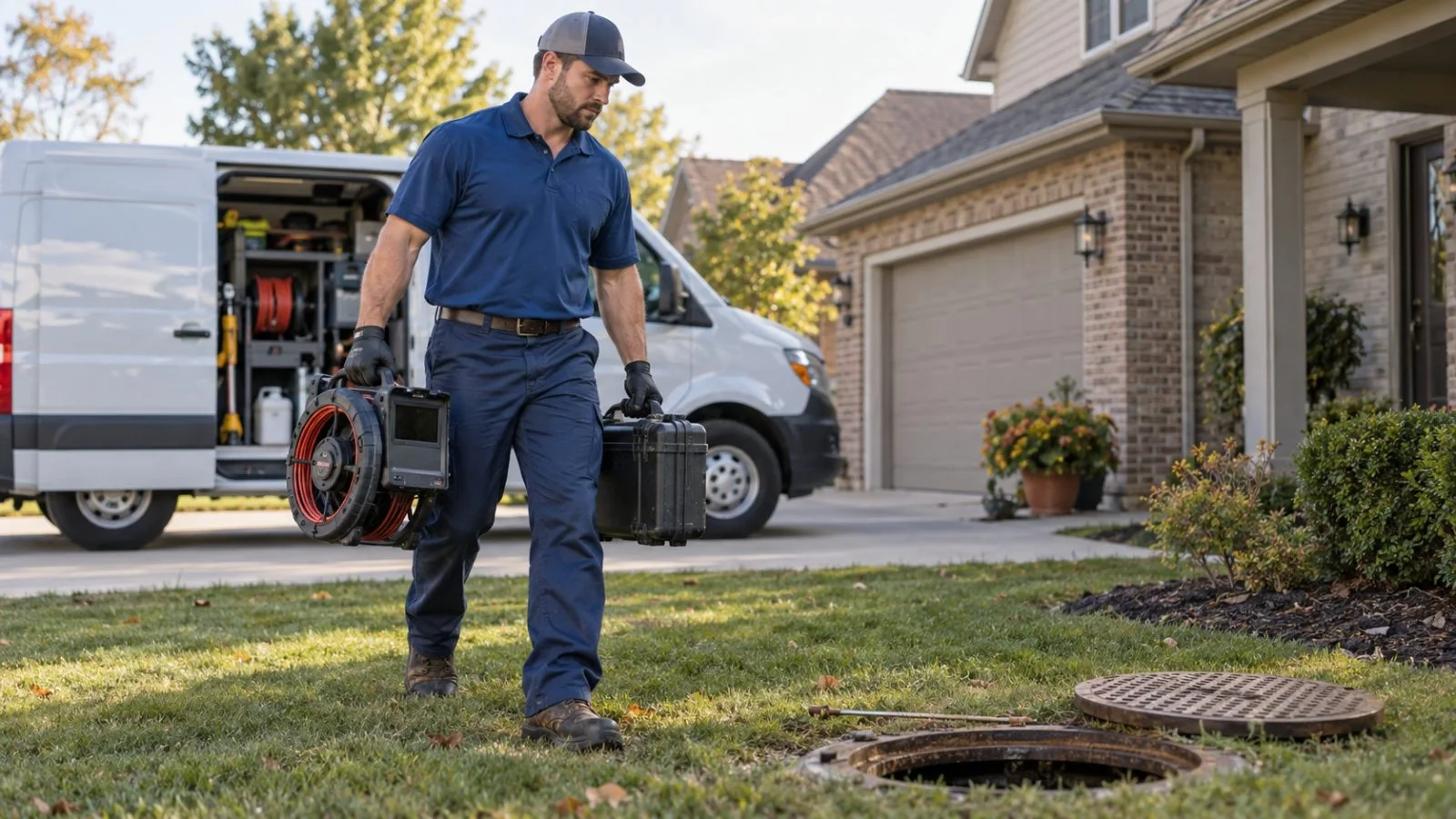
Look for a photograph or sketch of the cleanout, the access fitting used to enter the drain. A note such as “outside cleanout on east side, behind kitchen” is more helpful than “front of house.” Two openings a few yards apart can produce different footage readings for the same joint. The inspector should also say whether the camera traveled toward the house or toward the public connection.
A building with an addition may have more than one outlet. A detached garage or second dwelling may connect separately. If only one branch was inspected, draw that branch on the property sketch and leave the others unmarked. A clean video of the garage run tells you little about a backup inside the original house.
What does zero mean?
Ask where the footage counter was set to zero. The start might be the mouth of a fitting, the base of a vertical access or another chosen reference point. If the video begins with several feet already on the display, write down the operator's explanation. It matters when someone later tries to find a defect from a different opening.
Match the finding to a frame
Ask for a timestamp and a footage reading for each finding that affects the proposed work. A timestamp such as 02:17 identifies a moment on the recording. A cable reading identifies distance along its route. Neither alone tells an excavator where to open the lawn. Matching the two lets a second bidder watch the approach, the closest view and the section beyond.
Watch the approach as well as the still
A freeze-frame can make a shadow look like a missing piece of pipe. Watch a little earlier and later, then ask the operator what feature remains in view as the camera moves. At a joint, for example, the relevant question might be whether two pipe ends line up and whether debris catches there. A single still may be too close to show the whole circumference.
What the report can establish
| Report entry | What it supports | What to request next |
|---|---|---|
| Roots visible at a joint | Growth projects into the passage at that location | A view of the joint and adjacent wall after clearing |
| Standing water covers the lens | The image ends or becomes incomplete under water | The length affected and evidence for the proposed cause |
| Offset at material transition | Two visible pipe ends meet at different levels | A surface location and the usable opening at the joint |
| Camera reached a connection | The operator identified an endpoint | The frame and description identifying that particular connection |
Locate the finding above ground
Distance and depth answer different questions
A cable follows bends and vertical drops. Forty feet of cable can end up considerably less than forty feet across the yard. A surface locate is a separate step. Ask how the provider located the camera head, where it placed the mark and what depth estimate it recorded. An estimate of depth at the cleanout does not establish the depth farther downhill.
Put a photo of the mark beside your sketch. Include a permanent reference such as the corner of the garage and take a wider shot so a bidder can recognize the location after the paint fades. If the mark falls near a fence, identify who controls access on each side. The mark relates to the inspected line. It does not identify all the utilities that may cross a proposed excavation.
Read the visibility limits
Look for the last clear view
Water, loose material, an abrupt bend or trouble advancing the equipment can limit an inspection. Ask the operator which condition ended the run and what they could actually see at that moment. If they suspect a collapse, ask which frames show a damaged wall and which show only an obstruction. Record the answer alongside the proposed next step.
There is a practical difference between “wall missing at the mark” and “unable to pass the mark.” For the first, a bidder may be able to price access to a documented failure. For the second, ask how it would verify the condition and how much you would owe for that investigation if a different repair proves appropriate.
Identify the inspected connection
Fort Wayne City Utilities distinguishes the private service pipe from its public sewer and publishes connection information. A phrase like “main line” can mean the largest drain serving the house in everyday conversation. Ask the inspector to identify whether the run ended in the private building sewer, at the connection or somewhere short of it. Check the City Utilities sewer system guide when the proposed work reaches the public connection.
Keep the utility and the bidder on the same drawing
If a utility investigated a backup on the same day, attach the service reference to the inspection file. Its observations may concern the public system on the street. The private recording may concern a specific break in the yard. Ask the bidder to identify which finding its proposal addresses. Fort Wayne’s utility rules are the starting point for questions about work at its connection.
Compare two reports of the same line
Imagine that one report places a defect at 32 feet and another at 51 feet. Before assuming a second defect has appeared, compare entry points, direction, zero readings and recorded landmarks. A branch entering from the side or a transition between two materials can help the inspectors decide whether both cameras passed the same joint. Ask each provider to mark its reading on the same surface sketch.
Read the cleaning date
A recording taken before cleaning may show roots filling the screen. A recording made afterward may reveal an open joint beyond the original stop. The two views can describe successive stages of the same inspection. Label the recordings “before clearing” and “after clearing” and keep both dates. This is particularly important if a new quote proposes work beyond the first contractor's stopping point.
Turn the evidence into a repair scope
For a spot repair, ask for the proposed start and finish in relation to the finding. For a longer replacement, ask what justifies including each additional section. If one end remains unseen, the bid should say how the contractor will decide whether to continue and who can approve the additional work. Compare that explanation with the repair process guide before accepting a price.
Ask for a line you can recognize in the estimate
“Replace pipe in yard” leaves an opening for disagreement about the driveway. A clearer description identifies the marked joint, the intended sound pipe on either side, the finished surface and the restoration included. Ask the bidder to distinguish confirmed work from an allowance for conditions it might uncover. An allowance should tell you what triggers a change and how the change is priced.
Try the report on a second reader
Hand the written report and the sketch to someone who was not at the inspection. Ask them to point to the access, the finding that drives the repair and the last location the inspector could see. If they need a phone call to distinguish three different marks, add a key while the inspector still remembers the site. Label a mark for the defect separately from a proposed staging area or an alternate access point.
Then read the scope backward, beginning with the proposed endpoint. Can the inspector show where that endpoint appears in the recording? If it was chosen to reach a sound joint outside the visible damage, ask the bidder to say so. That explanation helps a second contractor price comparable work even when the two firms would approach the repair from different sides of the yard.
Build a handover another person can use
Save the full recording in a format you can open, the dated report, the sketch and the written proposal in one folder. Test the download before a temporary video link expires. Give each file the street address and date so it cannot be confused with another property or a previous inspection. Keep a short list of the portions nobody could inspect.
After work, ask the contractor to show where the newly installed section begins and ends relative to the original finding. Save the final record with the invoice and any separate pavement or landscaping agreement. For work that involves excavation, the Indiana 811 homeowner guidance explains the separate utility locating process. The inspection sketch answers a different question and belongs in the same project file.
Frequently asked questions
Is the footage counter the depth below the yard?
It measures travel along the camera cable from a reference point. Ask for a separate surface location and depth estimate for the particular defect.
What if the recording ends in dark water?
Ask the inspector to identify the last clear view and the reason the camera stopped. The wall beyond that point remains unexamined.
Can I use an earlier report for a new estimate?
Yes. Supply the original recording, date and entry point. The bidder can explain whether cleaning, a new location mark or another pass is needed.
What should I ask for after a repair?
Request a record of the completed section, its endpoints and any part that could not be examined. Keep the final drawing with the original footage.