Repairing a sewer line under driveway pavement
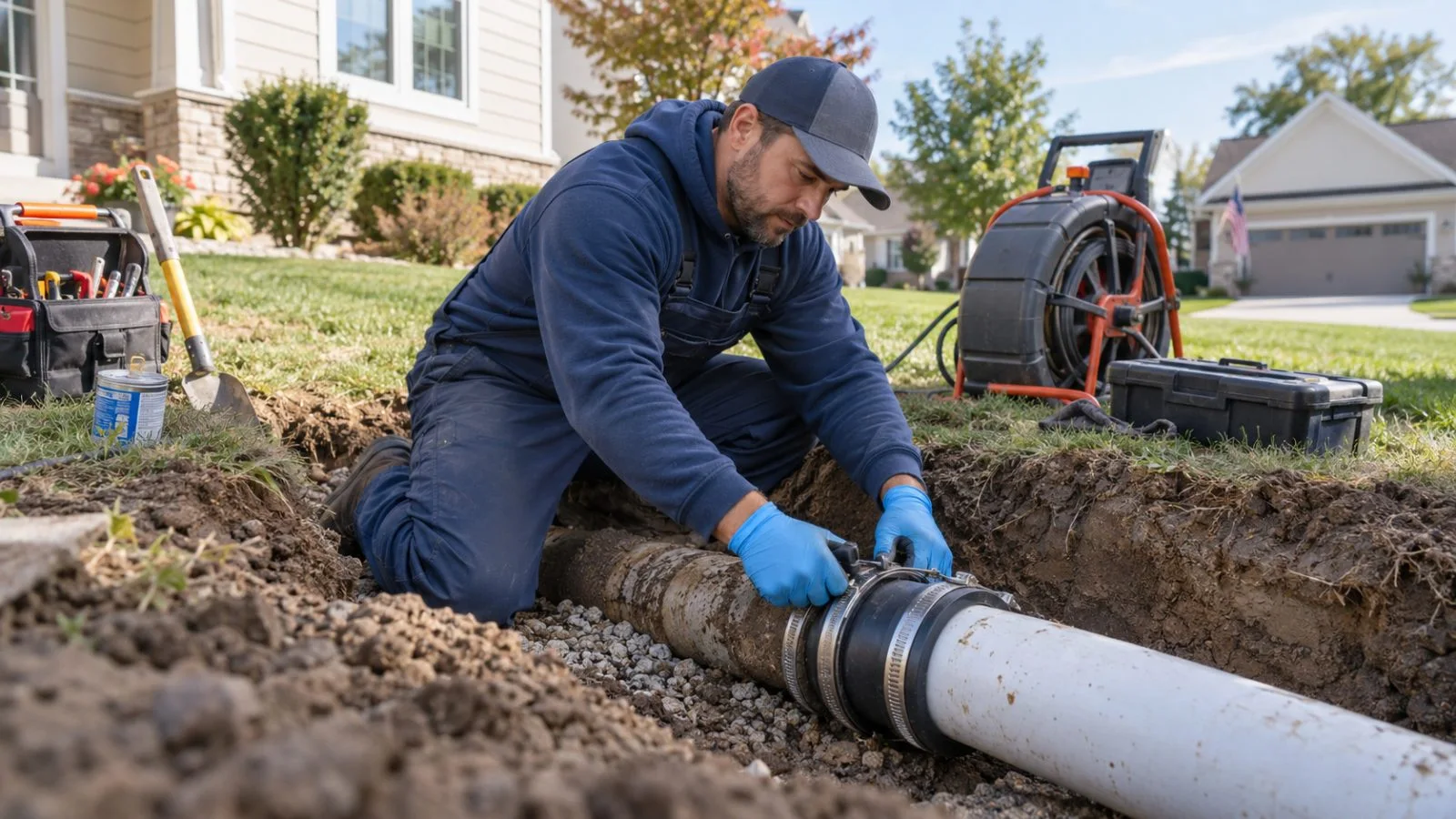
A sewer repair under a driveway may need a small opening, a continuous trench, or no cut in the paved surface itself. Ask the contractor to draw the damaged pipe, each proposed opening and the finished pavement it will replace. Those three outlines can differ substantially. Send a photograph of the driveway and an existing location mark with your estimate request. The 2026 This Old House guide gives $50–$200 per foot as a national range for traditional excavation. Have the bidder itemize pavement restoration separately.
A national price per foot of sewer cannot tell you how much concrete will be replaced. A short defect may be under a wide panel, while a longer run may be accessible from two unpaved areas. The Fort Wayne cost guide distinguishes published national pipe prices from site access, pavement work and final restoration on an individual bid.
Locate the pipe before choosing a method
Trace the actual route
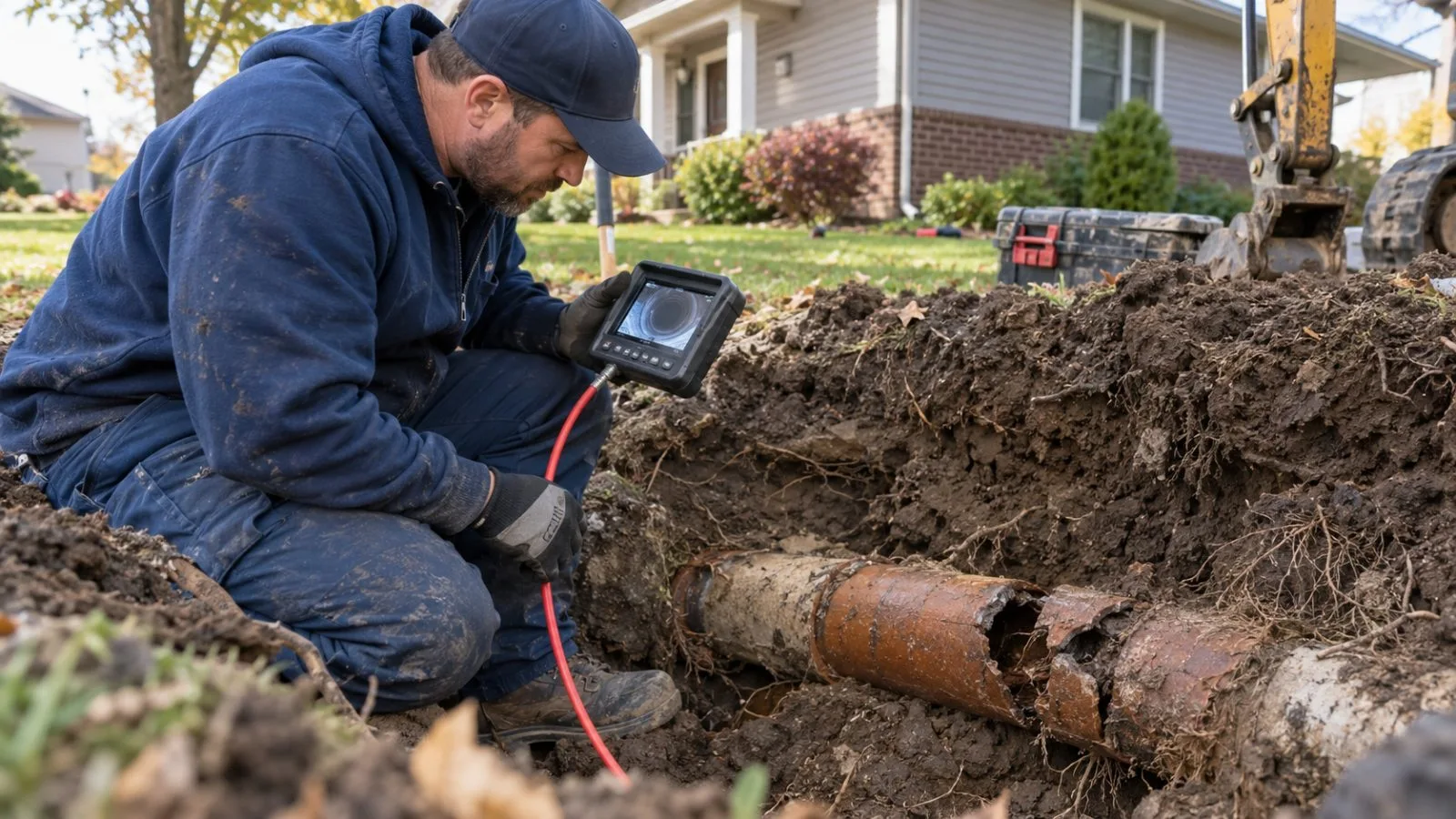
A line between the cleanout and the street is a reasonable sketch to bring to an appointment. It becomes a poor basis for cutting pavement if nobody verifies the route. Ask the provider to mark the camera location at the defect and identify how the line approaches and leaves the drive. A branch, bend or change in depth can move a proposed opening closer to the garage than the homeowner expected.
Keep an overview photo that shows the mark and a permanent landmark. A close-up of orange or green paint fills a phone screen but gives a concrete contractor little sense of where it lies. Include the width of the driving surface and which side borders grass, a fence, a retaining wall or the house. Those details affect how equipment can reach a small opening.
Draw three outlines on the estimate
Pipe, excavation and finish
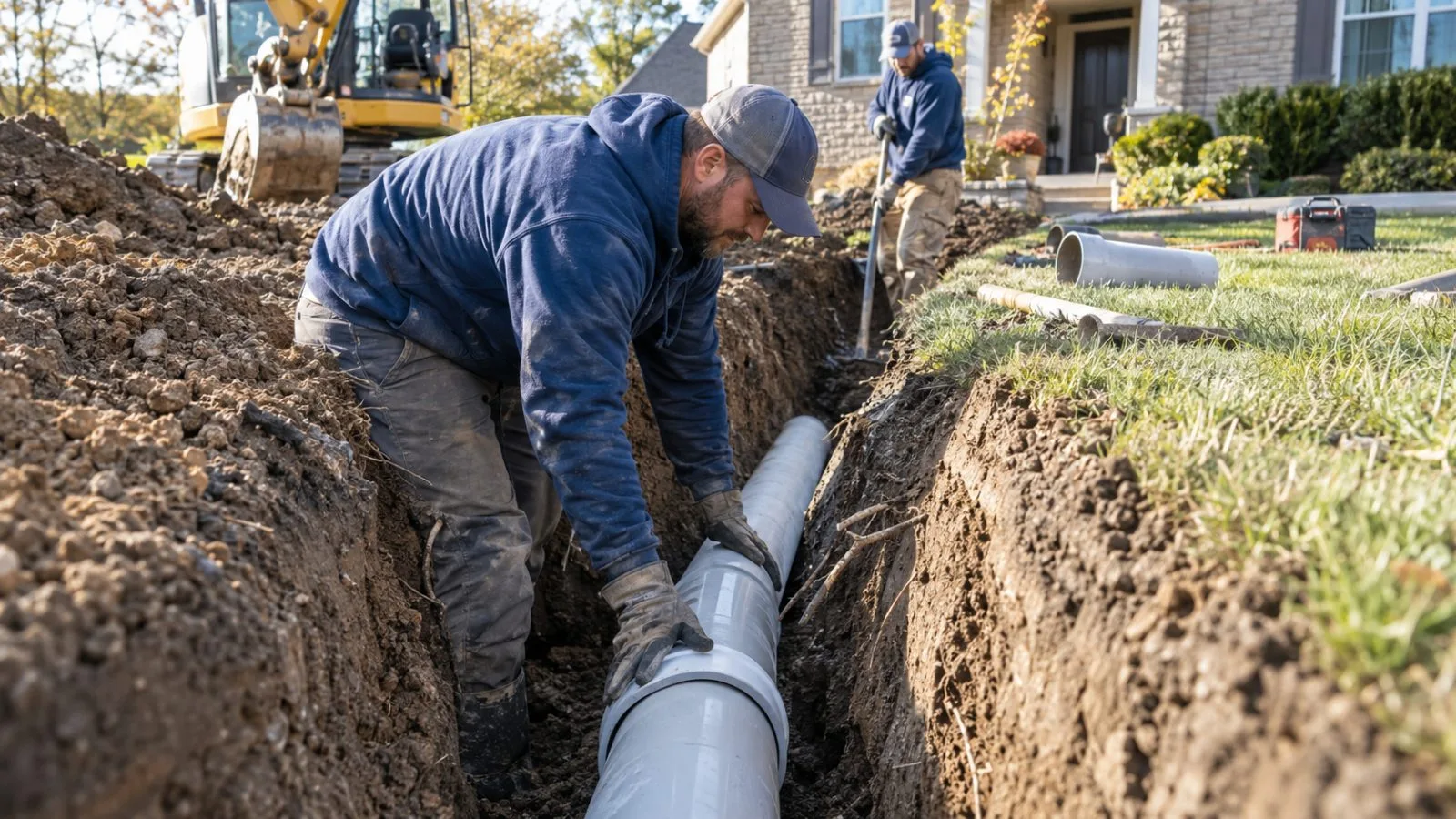
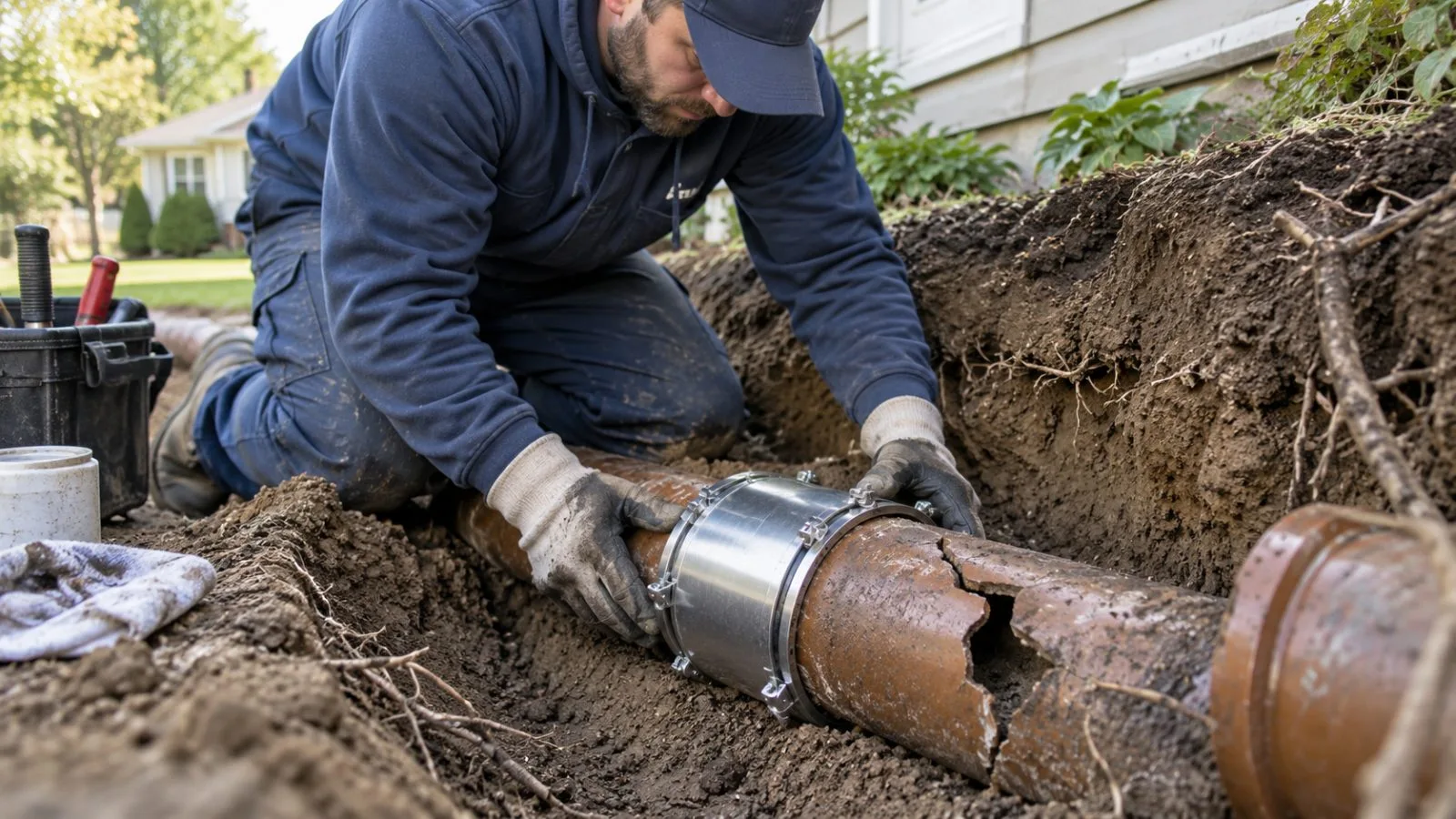
The first outline is underground, from the proposed start of repair to the proposed end. The second is the excavation or access area the crew expects to use. The third is the surface the restoration contractor will remove and replace. On a concrete driveway the finished repair may extend to an existing joint. On pavers it may include enough adjacent units to rebuild the edge and bedding.
Ask the bidder to label measurements on the sketch, even if final dimensions depend on the condition found underneath. The difference matters if part of a panel belongs to a shared drive. A pipe scope entirely on your parcel may still require equipment or pavement work across an access boundary.
Compare ways to reach the defect
| Proposal | Likely surface question | Evidence to request |
|---|---|---|
| Spot excavation | Where can the crew expose both ends of the broken section? | Surface mark, estimated depth and proposed patch outline |
| Continuous excavation | How much of the driving surface will be closed? | Route, staging space and permanent restoration limits |
| Pipe lining | Where will the installer gain access and deal with branch connections? | Video of the existing passage and the proposed lining limits |
| Pipe bursting | Where are the entry and receiving pits? | Layout of pits, connections and nearby facilities |
Read a trenchless proposal closely
Mark both working areas
The word “trenchless” describes how the main stretch of pipe will be treated or replaced. It leaves open where the equipment starts, where it finishes and how a branch will be connected. Ask the contractor to point out the access on site. A shaded area on a diagram may turn out to occupy the only parking space or the gate needed by a neighbor.
Ask what the installer saw that makes the method suitable. A liner follows the route of the existing pipe. Pipe bursting has its own access and space requirements. If the proposal assumes a usable receiving point on the other side of the drive, ask who verified that point. Review the trenchless assessment questions against the site drawing.
Identify who controls the apron
A private drive can meet a public work area
A house driveway may cross a sidewalk or public right-of-way on its way to the street. Ask which part of the opening lies under each surface and who can authorize work there. For a Fort Wayne City Utilities connection, start with the utility rules and regulations. Verify the authority responsible for pavement at the actual location before putting a restoration amount in the contract.
If vehicles share a drive, find out who can grant access and who needs advance notice. A neighbor giving verbal permission to move a car is different from permission to remove part of a shared slab. List unresolved permissions in the quote so a provisional construction date does not look like a confirmed closure.
Inventory the things below and beside the pavement
Which facilities need a separate locate?
Give the contractor any plans for lighting, a detached garage, sprinkler pipes or a privately installed gas line. Ask who will arrange the relevant utility locates and whether private facilities need separate attention. Paint from a sewer camera operator may locate one pipe but says nothing about everything else in the same opening. Indiana 811 explains the roles of the homeowner and excavator when planning digging.
Above ground, note downspouts, gates, stone edging, steps and overhead clearance. Tell the bidder if the driveway also provides the only step-free entrance to the property. Ask it to describe a route people can use while access is restricted. Arrange this before work begins so weather or a change in the opening does not strand an occupant inside.
Compare restoration line by line
Concrete, asphalt and pavers need different descriptions
For concrete, ask which joints bound the finished work, what surface texture the contractor includes and how it will meet existing edges. For asphalt, ask how the bid treats the base beneath the patch and the transition to existing pavement. For pavers, ask whether the contractor will lift and store the originals, replace broken units and reset the bordering rows. “Restore driveway” answers none of those questions on its own.
Appearance matters on an older drive. New concrete or asphalt can look different from material that has weathered for years. Ask what matching is included and discuss whether you prefer a patch or a larger panel. If a newer decorative finish was added over the original slab, identify it while the bidder can still see it.
Plan the closure around the household
Separate sewer use from vehicle access
The plumber can finish the pipe while the driveway is still waiting for its permanent surface. Ask for four milestones in ordinary language: when you must move vehicles, when household drains are available, when people can walk across the work, and when vehicles can return. The paving installer should set the last two conditions for its material and the weather on that job.
If you rely on deliveries, accessible transport or a detached garage, identify the one trip that cannot be postponed. Ask who will tell you about a delay and how much notice they can give. A working sewer and an open street do not necessarily restore access to a vehicle left on the wrong side of the opening.
Catch the gap between two contractors
Consider two hypothetical bids. One includes excavation, sewer work and backfill with a temporary stone surface. The other includes those items plus removal to concrete panel joints and permanent paving. A lower first total could still leave you arranging another contractor. Put each item in the same column and request a separate restoration proposal before comparing the final cost.
Ask who deals with settlement or a reopened seam and where those terms appear in writing. If a second contractor handles the pavement, identify who accepts the prepared base and who coordinates access to finish it. Keep the contact for each part of the work. Check City Utilities’ private connection information if the sewer itself reaches its public network.
Put the drawings side by side
Suppose one proposal shows an opening in the planting strip beside the drive and a second opening in the yard beyond it. Another shows an excavation across the full width of the pavement. Ask both providers to mark the joint they intend to repair. If that mark matches, the difference may be method or access. If the marks are several yards apart, resolve the location before asking which surface repair is cheaper.
Next walk the equipment route with the estimator. A pit entirely in grass may still require a machine or a spoil container to cross the driveway. Note how the bidder will protect the pavement outside the agreed work area, where material will be stored and who records its condition beforehand. Take a wide photo of existing cracks with the provider. That shared record can settle a question at handover without relying on anyone’s memory of an old hairline crack.
Keep the finished layout
What to photograph at closeout
From outside the work area, take or request a final photograph of the new surface and a marked sketch of the repaired pipe beneath it. Keep the names of both contractors, the reopen instructions and any inspection record with the property documents. If the sewer needs attention years later, knowing which section runs under the new panel can spare the next owner a second round of exploratory pricing.
Frequently asked questions
Can a trenchless repair still require a driveway cut?
Yes. A short access excavation or connection opening may still fall in pavement. Request a drawing of every opening before comparing methods.
Who replaces the concrete?
The proposal should identify the business doing the permanent repair and whether the quoted total includes it. Ask separately about the public sidewalk or apron.
When can I park on the driveway again?
Ask the pavement installer for a reopening instruction specific to the material, weather and vehicle load. Sewer service and vehicle access can return at different times.
Does an 811 ticket identify every line under the driveway?
Ask the excavator which facilities are covered by its ticket and how private facilities will be located. Give the contractor records of irrigation, outbuilding feeds and other owner-installed lines.