
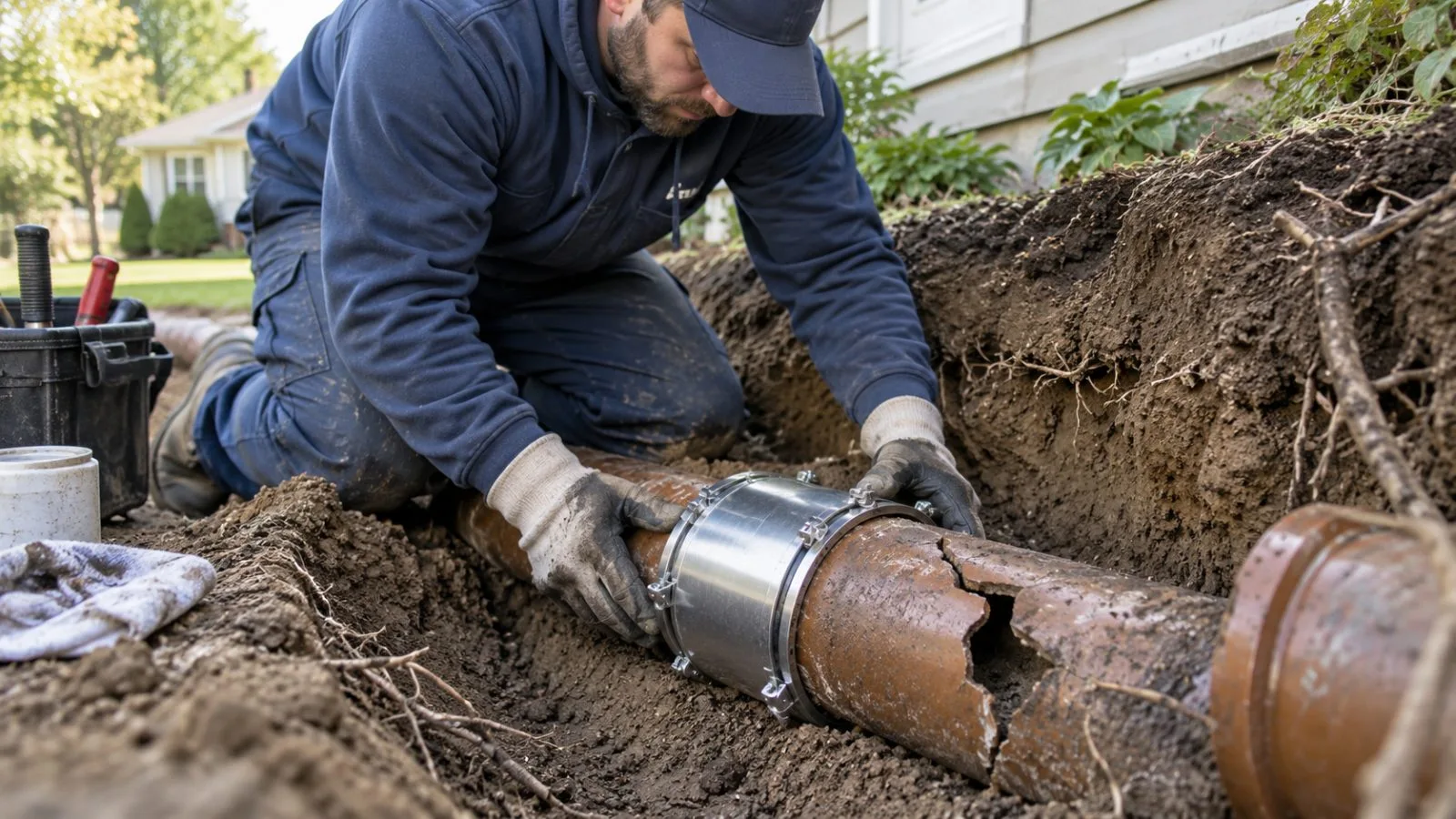
Sewer line repair cost in Fort Wayne, IN
Use published national ranges to plan a budget, then compare written quotes for the same repair limits, access and finished surface in Fort Wayne.
Published cost ranges
Traditional excavation, per foot
Trenchless replacement, per foot
Camera inspection, per inspection
National estimates in This Old House, March 2026.
| Scope | U.S. budgeting range | What to clarify |
|---|---|---|
| Sewer replacement, across methods | $50–$250 per linear foot | Measured endpoints and included labor and materials |
| Traditional excavation | $50–$200 per linear foot | Access, bedding, disposal and surface repair |
| Trenchless replacement | $60–$250 per linear foot | Method, openings and reconnections |
| Camera inspection | $100–$500 per inspection | Recording, surface locate and written deliverables |
This Old House, Sewer Line Replacement Cost, updated March 30, 2026. National ranges. Request a local quote.
What an estimate measures
| Item | Useful unit | Record to request |
|---|---|---|
| Pipe | Linear feet | Locate marks and endpoints |
| Surface removal | Measured area | Driveway or sidewalk limits |
| Excavation | Length and depth | Access plan and utility locates |
| Inspection | Defined task | Video and written findings |
A per-foot allowance can hide a significant fixed expense. A short cut below concrete still needs access, protection of adjacent utilities and a finished surface. Ask which charges change with length and which are payable whenever equipment is mobilized.
Compare methods on equal terms
| Evidence | Decision to discuss |
|---|---|
| A video stops at an obstruction | Locate the stopping point and establish what lies beyond it before deciding on replacement. |
| One damaged joint is visible | Check the adjoining pipe, depth and access for a limited opening. |
| Multiple sections have defects | Compare the proposed endpoints and the remaining serviceable length. |
| A usable pipe runs below paving | Evaluate a lining or replacement method alongside paving restoration. |
When a contractor recommends lining, ask what is known about grade and branch connections. In a replacement quote, clarify whether the excavated pipe is removed, bypassed or left in place and how the new route meets the public connection.
Read a national range as a budgeting figure
The national figures at the top of this guide describe work sold in different markets and under different conditions. They are useful when a property owner needs to understand the scale of a repair before arranging an inspection. A local bid needs a location, a reason for choosing the repair method and a description of the finished surface. Until those are known, a number quoted for another house is a weak guide to this one.
Ask whether a quoted figure is a measured line item, a minimum charge, an allowance or a total for a defined scope. A price per foot applies to an agreed length. Mobilization, camera work, traffic arrangements and restoration may be priced separately. Alternatively a provider may include several of those items in a single fixed sum. Both approaches can be compared if the inclusions and exclusions are written out.
This Old House gives a national replacement range of $1,390–$5,320 in its March 2026 cost guide. Its guide draws on Angi estimates and reports separate per-foot ranges for excavation and trenchless methods. These describe different ways of reporting cost. Adding the national project range to an estimate based on footage would count parts of the same work twice. Ask the provider which figure applies to the inspected job.
Calculate a pipe allowance from measured footage
For illustration, applying the March 2026 This Old House excavation range of $50–$200 per foot to a measured 20-foot section gives a pipe-work allowance of $1,000–$4,000. This multiplication is an example using the national range. It is not a local bid or a quoted minimum. Do not add a second allowance for an item already included in the rate.
National per-foot figures from This Old House, March 2026.
Change the footage only when the inspection or scope supports a different length. If one estimate measures to the property line and another measures to a joint beyond it, calculate each separately and label the endpoints. Then compare costs for the same finished work, including access and the surface the contractor will leave behind.
What the inspection fee actually buys
When arranging a camera visit, ask what the inspection price includes. A visit might include access assessment and a recording, while a surface locate, additional access point or written repair recommendation carries a separate charge. A plain description of the deliverables makes it easier to compare two providers who both advertise a camera inspection.
This Old House lists camera inspections at $100–$500 in its March 2026 replacement guide. It is one budgeting reference, and it does not establish an inspection fee for Fort Wayne Sewer Pros or for an independent contractor. Confirm the fee before booking. If the provider offers to credit it toward a later repair, obtain that arrangement in writing and ask whether it applies only if the same business performs the repair.
The value of the recording depends on what it identifies. Ask the inspector to record where the camera entered, the direction of travel, where it stopped and whether the adjoining pipe was visible. A report that documents an inaccessible section can still be useful. It tells a second estimator which part of their price rests on an assumption.
Define a spot repair by its endpoints
A spot repair is easier to price when the damaged joint can be related to a surface location and sound pipe is visible on both sides. Ask the contractor to identify the expected limits in the proposal. A description such as “repair the break in the yard” can leave room for disagreement about a nearby offset joint or another damaged area just beyond the original camera view.
Clarify the assumption about the existing pipe. If the quote assumes that the contractor will find sound material immediately beside the break, ask what happens if the adjacent pipe is damaged when exposed. The answer may be an agreed unit rate, a revised written price or a pause for another inspection. The important detail is who decides to extend the work and how that decision changes the price.
Look for the closeout items on even a short repair. Ask whether a completion check is included, how the repaired location will be marked in the property records, who supplies backfill and who restores the surface. A localized pipe repair can still require a substantial paving or landscaping task if the access point lies beneath a finished area.
Compare partial and full-length replacement
A provider may recommend replacing a section with several defects while retaining a sound run toward the public connection. Another provider may recommend replacing the entire private lateral. Put the endpoints on one sketch and ask which parts of the existing line remain under each option. Without that comparison, a large difference in totals may simply reflect a difference in length.
For the retained section, ask what inspection evidence supports leaving it in service. If the camera could not pass a damaged area, that is a limitation the proposal should identify. Ask whether the plan includes examining the remaining line after access is restored and what happens if the second inspection changes the recommendation.
A full replacement can also differ in route. One proposal might follow the original path while another needs a different alignment to reach a suitable connection. The latter may change the surfaces affected, the permissions required and the point where a branch must reconnect. Request the reason for the proposed route and a clear statement of what happens to the old section.
Price access on a paved property
A driveway crossing introduces questions that a per-foot pipe price cannot answer. Find out whether the provider plans to open the pavement above the defect, reach it from a nearby opening or use an alternative method from access pits. Ask for the dimensions of any opening and what must remain available to occupants while the work takes place.
The repair of the driveway may be a separate trade. If one provider includes paving and another leaves a temporary surface, request a comparable total from each. Establish the expected base, finished material and area of replacement. A contractor may be able to give a firm pipe price while treating the restoration as an allowance. The written estimate should make that boundary visible.
A shared drive adds coordination even if the pipe itself serves one property. Identify who must consent to equipment access, where material will be stored and which household requires vehicle access at particular times. An estimate that assumes unrestricted use of the full drive should be revisited if a neighbor cannot grant that access.
Understand the limits of lining
A lining proposal needs an existing route that the provider considers suitable. Ask what condition the camera showed and what pipe preparation is included before installation. A price for installing the liner might assume that an obstruction has already been removed or that access is available from an existing opening. Record those assumptions when comparing with a digging proposal.
Ask how the provider will handle connections along the section to be lined, which endpoints define the work and how it will document the finished result. If the recording shows standing water, ask the person proposing lining to explain its cause and how the proposal addresses it. A description of a new interior surface does not resolve a question about the route's grade.
The quoted national lining range covers the pipe method; a Fort Wayne property can also require preparation, an access opening and surface repair. Ask whether those items appear inside the quoted total or on separate lines. Keep a copy of any product terms alongside the contractor's own agreement so you can identify who is responsible if you have a question after completion.
Read a pipe-bursting proposal from pit to pit
A replacement pulled through an existing route requires a plan for entry and exit. Ask the contractor where those working areas will be and how that decision affects a drive, fence, planting bed or shared access. A buyer choosing this method because the route runs below paving should ask which paved areas, if any, must still be opened.
The provider should assess the existing route, nearby infrastructure and the connections to be restored. From the owner's perspective, the comparison is between completed scopes. Identify the new pipe endpoints, access pits, reconnections, inspection records and surface work in one list. If another bidder offers open excavation, ask for the same categories so the prices can be compared.
Discuss how the contractor will handle an obstacle that prevents the proposed method from proceeding. Ask which preparatory charges remain due and whether a change of method requires separate approval. This is particularly important when the route is beneath a surface the owner is trying to preserve. A decision about opening that surface should reach the person authorized to approve it.
Separate excavation from surface restoration
For an open repair, the excavation is part of a larger job. The provider needs safe working space, access to the affected section and a plan for the material removed. Explain whether equipment can enter from the street, along a drive or only through a restricted opening. The contractor determines excavation safety. The owner can clarify where the proposed working space is available.
Ask how the proposal handles excavated material that cannot be reused, imported backfill and the level at which the provider hands the surface back to you. A lawn restoration can mean rough grading, replacing topsoil, seeding or installing finished turf. A driveway restoration can involve both a temporary surface and a later permanent repair. Identify which of those outcomes the written price buys.
Before work begins, document the existing condition of the actual access route from a safe place. This gives both parties a reference if the discussion later concerns a gate, a walkway or the edge of a planting bed. Include the restoration contact in the closeout record if someone other than the pipe contractor is responsible.
Distinguish utility work from private work
Fort Wayne City Utilities publishes information on connecting a private building sewer to its public sanitary system. If a proposed repair reaches that connection, identify the part of the work the provider is pricing. A property owner considering bids should know whether the price covers only the building side, includes work at the tap or assumes the public utility will handle a separate issue.
If a public case is already open, obtain the reference and ask what the utility examined. The result may identify which section still needs a private inspection. A written estimate based on an assumed public repair is worth revisiting if the utility determines that the problem lies elsewhere. Equally, a homeowner should not authorize private excavation simply because another property on the street had a similar problem.
For a property outside the Fort Wayne system, use the provider named on its wastewater account. New Haven, Huntertown and other communities named on this site have their own resources. A Fort Wayne mailing address and a ZIP code help locate a property but do not settle the authority's requirements or establish local permit charges.
Fort Wayne's private lateral and public connection information
Budget for investigation after an emergency
An urgent visit to restore drainage and a later structural repair can be two separate purchases. Ask what the first visit is intended to accomplish. If it only restores flow, obtain a record of the access used, the material removed and any portion that could not be inspected. Ask whether the provider expects a follow-up video and whether that work has its own charge.
If sewage entered the building, a pipe repair proposal may leave the affected interior for a separate specialist. Describe the extent of the affected area without entering an unsafe space. Ask the contractor to state whether its scope addresses the pipe, the damaged finishes or both. A quoted total covering exterior work alone should not be used to budget for the entire incident.
For insurance or a protection plan, preserve the original observations, photographs taken safely, invoices and any required authorization. If the situation involves immediate danger, prioritize safety. Ask the insurer or plan administrator what documentation it needs as soon as it is practical. An estimate website cannot decide whether the particular event is covered.
Check an optional plan against the exact loss
Fort Wayne City Utilities describes optional service line protection offered through American Water Resources. Check whether the property was enrolled when the problem arose and which service and segment are listed in the agreement. The utility's description helps identify the program. The document for the actual property determines the terms on which a claim can be considered.
Before hiring a contractor for non-emergency work that you expect a plan to cover, ask the administrator how authorization works. Find out whether the administrator arranges a provider, whether a deductible applies and whether restoration is handled separately. Record the response and the case number. A contractor's willingness to make a repair is a separate matter from the administrator's decision to pay for it.
If an estimate includes work beyond the section the plan covers, ask for the scope and price to identify that boundary. Keep the approved portion and the owner-funded portion distinct in your records. If the pipe problem later expands past the initially approved work, contact the person named in the agreement before assuming the additional cost is included.
Keep allowances, exclusions and changes distinct
An allowance is an amount included for an item whose final scope or price remains uncertain. Ask what it covers, what information will replace the allowance with a confirmed figure and how the final amount will be reconciled. Surface restoration, a second inspection or a change of access may warrant separate treatment depending on the job.
An exclusion means an item is outside the scope. If a sidewalk replacement is excluded, determine who will obtain the rest of that price and whether completion of the pipe repair depends on it. A bid with more exclusions can have a lower headline total while leaving the owner to coordinate several other tasks. Record the missing items before ranking the bids.
Agree how a change will be presented. Ask the provider to name the newly discovered condition, show where it is, identify the added or removed work and provide the effect on the price. Keep the accepted revision with the original estimate. A later invoice should then be readable against the actual decisions made on site.
Compare a short lawn repair with a street crossing
Consider two hypothetical proposals with similar pipe lengths. One opens a lawn on private ground and replaces a visibly damaged joint. The other reaches the end of a lateral beneath a paved approach and requires coordination with the authority controlling that surface. The appropriate comparison includes access, permissions, pavement and completion checks as well as the length of pipe. These are planning examples, not recorded customer jobs.
For the lawn repair, ask the bidder to specify the restoration finish and what happens if the adjacent pipe is unsound. For the street-side job, ask who obtains the applicable permission, how the public connection will be handled and who accepts the final surface. If the second bidder assumes somebody else will provide restoration, obtain that separate scope before treating the quoted price as a project total.
Comparisons become easier when each proposal answers the same question: what will be working, what will be restored and what remains for the owner when this contractor leaves? If either proposal leaves one of those answers open, request clarification while the inspection findings and site conditions are still fresh.
Questions to resolve before a deposit
Identify the business that will contract for the repair and the work the deposit authorizes. If the website referred the request to an independent provider, the agreement should name that provider. Keep the written estimate, the receiving business's details and the payment terms in the same file. Ask whether a preliminary inspection or materials order is included in the amount.
Read the milestones that trigger later payments. A milestone can correspond to an inspection, installation, required acceptance or a defined surface finish. Which milestones apply is a matter for the actual agreement. Obtain written clarification if an invoice could become due while restoration remains outstanding. This is particularly important when the pipe crew and the paving contractor return on different days.
At handover, retain the final scope, amounts paid, outstanding items and the correct contact for questions. If a warranty is offered, identify its issuer and the section or product it covers. A future buyer or property manager should be able to distinguish records of the original defect from the terms that apply to the completed repair.
Build a side-by-side cost worksheet
| Ask each provider for | Enter for proposal A and proposal B | Why a difference matters |
|---|---|---|
| Documented defect and inspection limit | Reference to the video, starting point and last visible section. | One bid may include pipe that has not yet been inspected. |
| Length and endpoints | A sketch from a fixed feature to a defined stopping point. | Different ends mean different quantities and sometimes different permissions. |
| Fixed costs and allowances | A list of included tasks, estimated items and exclusions. | A per-foot figure alone cannot represent every fixed expense. |
| Access and restoration | The proposed opening, temporary finish and final surface. | An unfinished driveway or lawn is work the owner still has to arrange. |
| Approval and closeout | Who signs changes, supplies inspection records and confirms final work. | A comparable total requires a comparable completed project. |
Use the worksheet with the inspector or bidder. Enter the contractor's actual answers and keep any unresolved line open. Do not assign a guessed Fort Wayne rate just to complete a comparison. A missing detail is a question to send back to the provider and can be more significant than a small difference between the prices already quoted.
What changes the local scope
Identify the sewer authority, pavement owner, property boundaries and any easement before comparing access proposals. Fort Wayne City Utilities publishes wastewater rules and connection resources. An address in a neighboring municipality may be under a different utility.
Review surface restoration
| Surface | Question for the provider |
|---|---|
| Lawn | Who brings topsoil, finishes grade and reseeds? |
| Driveway | Which base and paving limits are priced? |
| Sidewalk | Who confirms the required replacement panels? |
| Alley or road | Who arranges traffic controls and final acceptance? |
Check protection and payment
Fort Wayne City Utilities describes optional service line protection offered through a partner. Check any existing enrollment and the terms of the specific agreement before commissioning work. A contractor’s written scope and a plan administrator’s coverage decision are separate records.
Frequently asked questions
Which length should I use when comparing per-foot prices?
Use the distance each bidder measured between its proposed endpoints. Identify minimum charges, access openings and fixed mobilization costs before multiplying a unit rate by the length. Ask both businesses to price the same endpoints if you want a direct comparison.
Why can a short repair under concrete cost more per foot?
A small opening can still require equipment, pavement removal, a safe work area and a finished patch. Ask the bidder which expenses stay the same for a short run and which increase with footage.
How should an allowance for an unknown connection be shown?
Request the assumed connection location, the work priced under that assumption and the method for approving a change. If the provider cannot see the connection yet, agree on a defined investigation with its own scope.
Do lining and excavation prices include the same surface work?
Ask for the number and position of access openings in each proposal. Compare restoration, reconnection, traffic control where applicable and the result each method delivers for the documented defect.
When should I check an existing protection agreement?
Contact the named administrator before authorizing investigation or repair when the agreement requires advance approval. Ask who may perform the work, what records to submit and how payment is handled.
What belongs in a final comparison for a paved driveway?
Compare the pipe length, opening dimensions, replacement base, temporary surface, finished material and party responsible for return visits. Write down exclusions so a lower initial figure does not hide a separate paving contract.