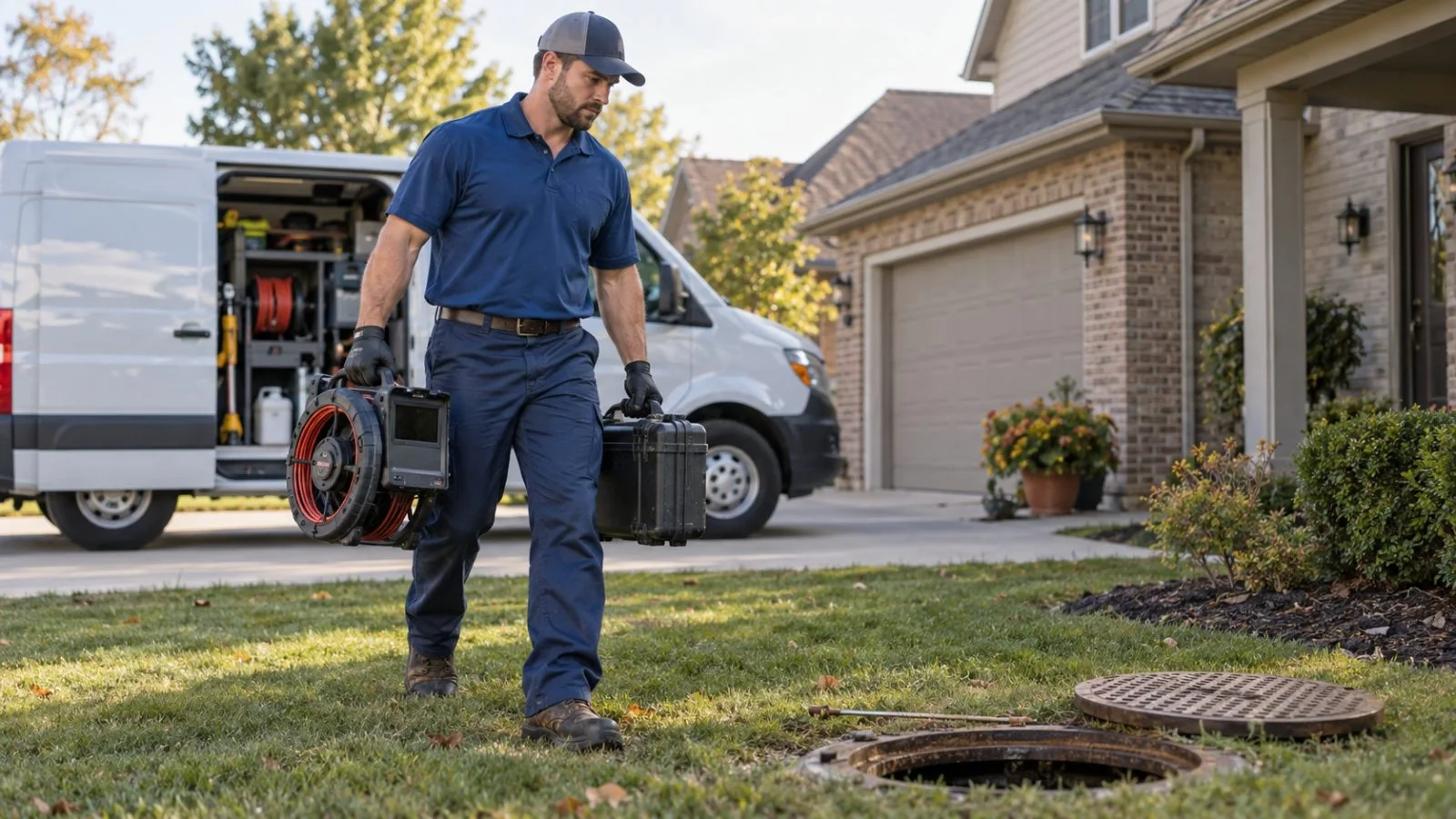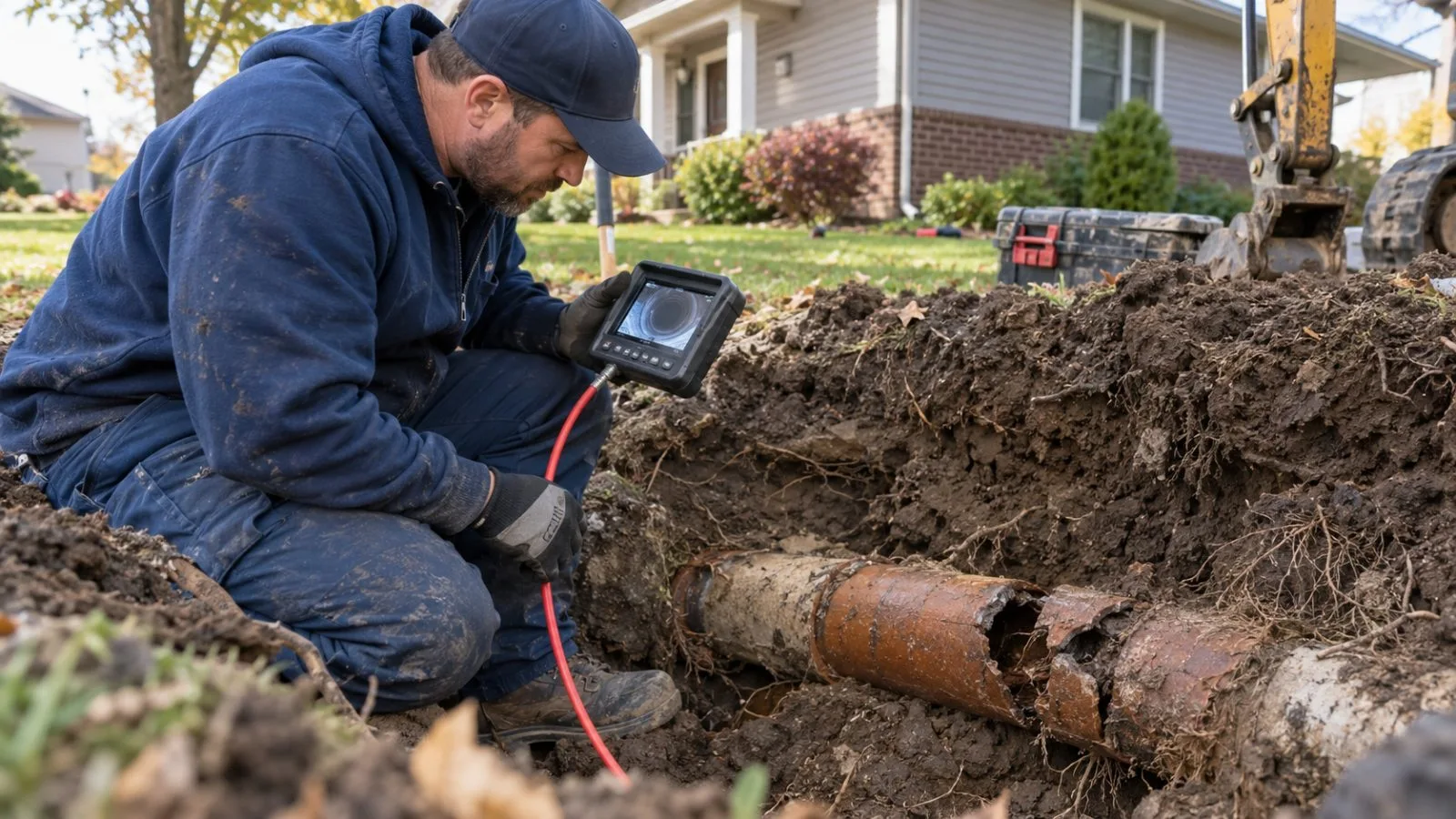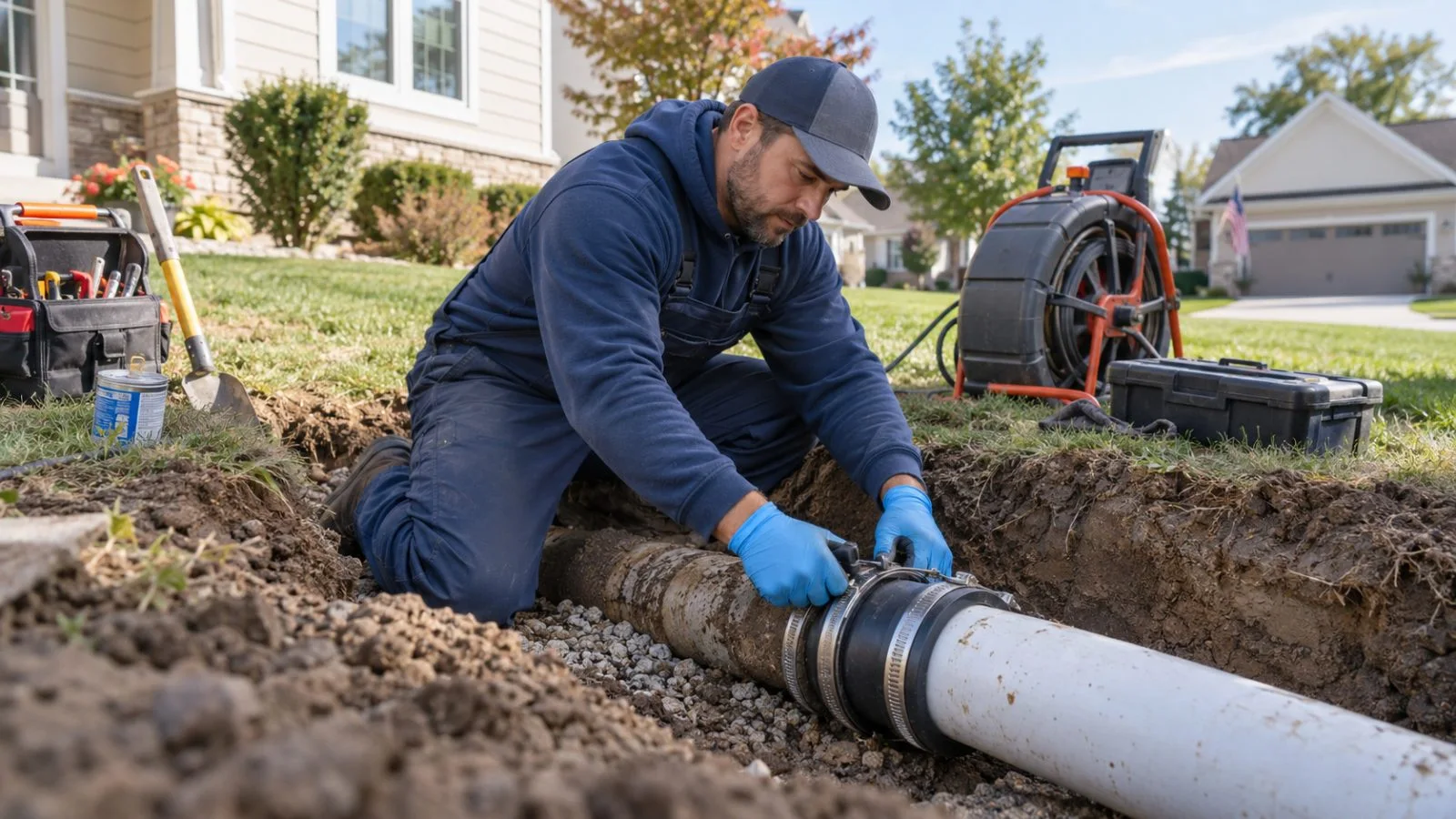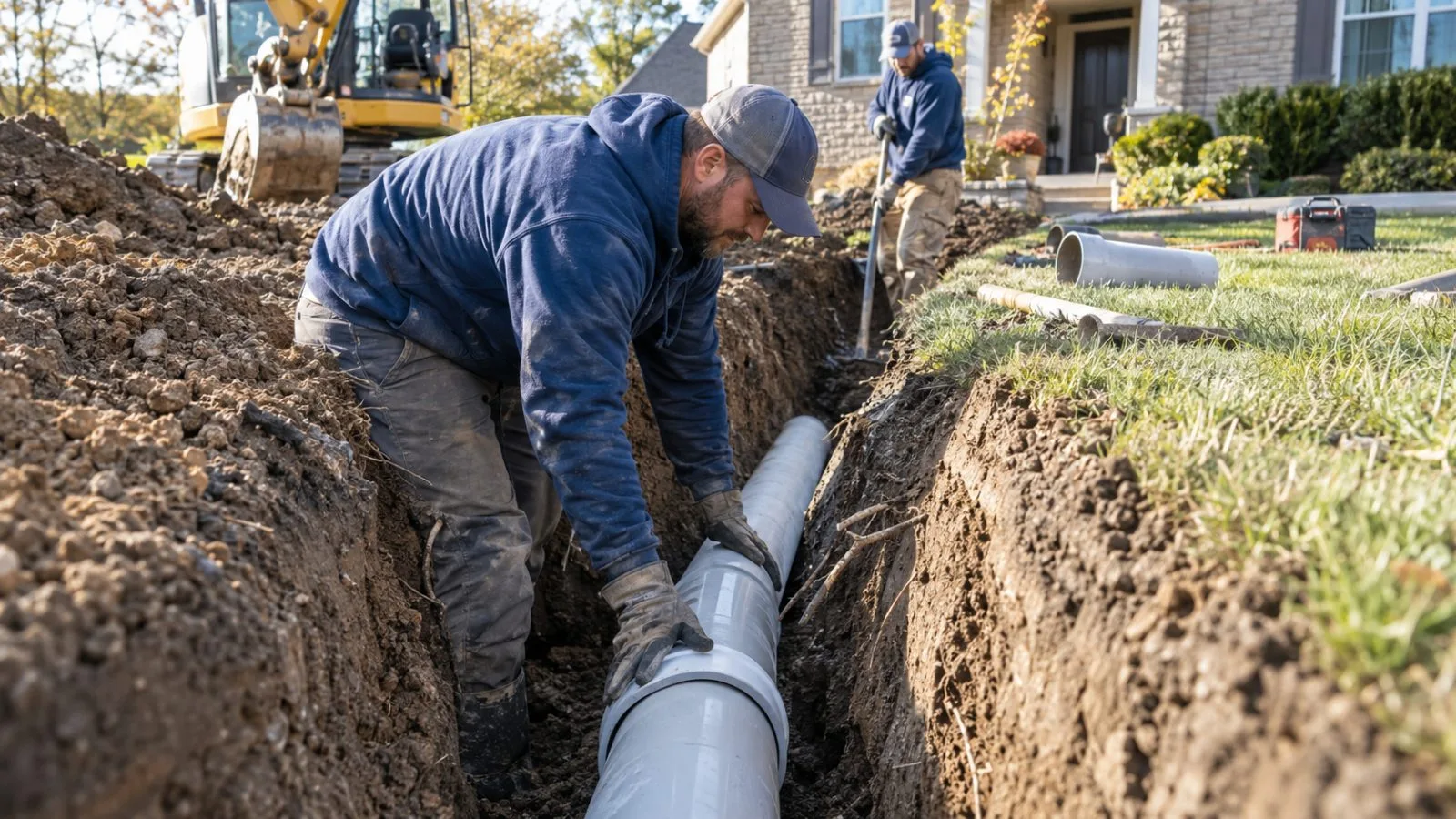
What tree roots in sewer lines look like after cleaning
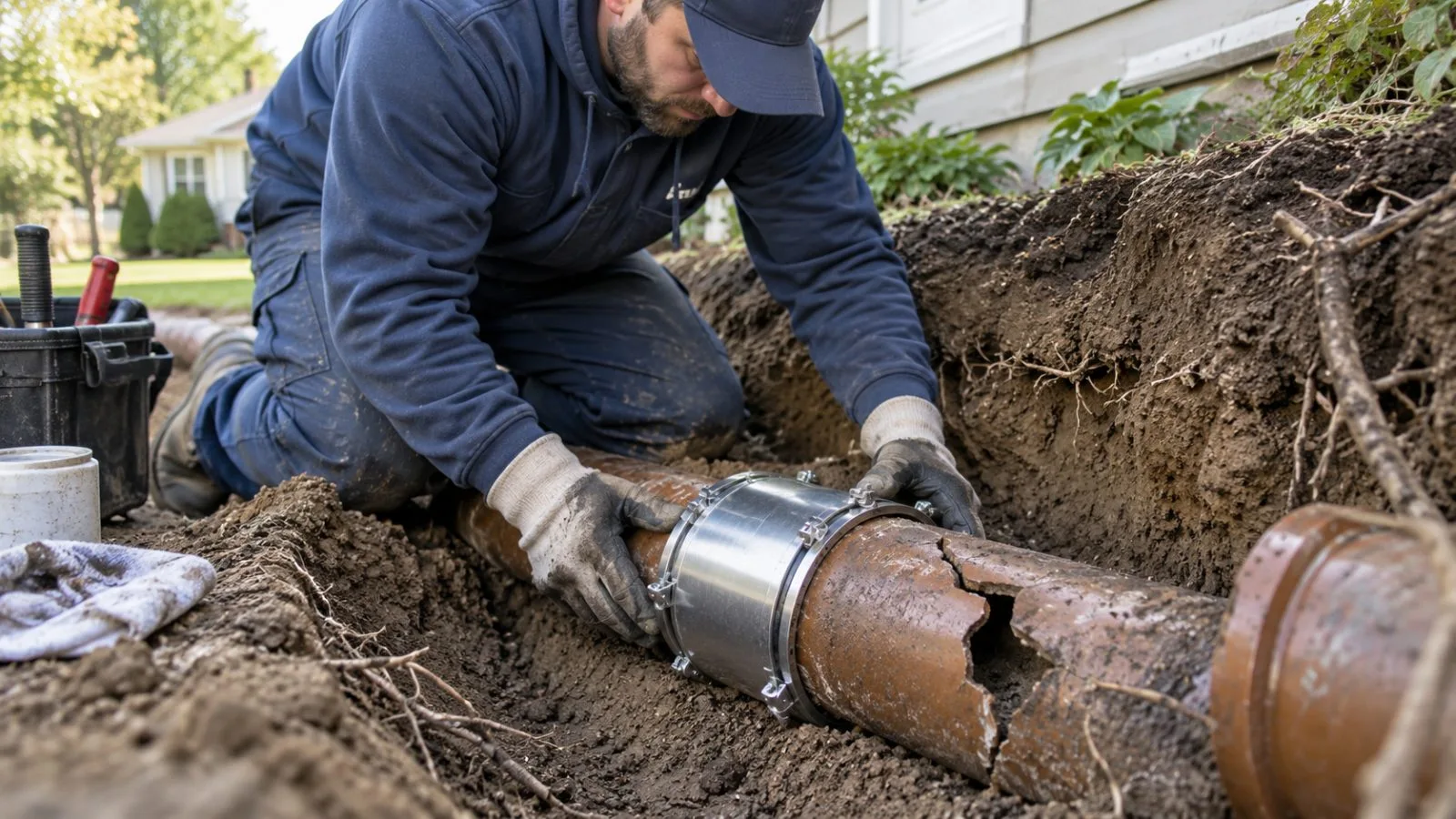
Roots on a sewer camera show where growth projects into the pipe. The most informative view is often the one taken after the passage has been cleared. Ask for those frames, the location of each entry point and the condition of the adjoining pipe. Send the cleaning record with a repair estimate request so the bidder can price the defect you actually have. If a new inspection is needed, the 2026 national camera inspection benchmark is $100–$500. Ask whether clearing the roots is an additional service.
Fort Wayne identifies roots among the causes of private sewer blockages. A cleaning bill and a repair proposal buy different things. One can restore flow today, while the other may repair the joint where the roots entered. For a proposed replacement, the repair cost guide explains how published national ranges relate to repair length, access and restoration.
Find out where the roots enter
One joint or several?
Ask the inspector to pause at the first visible strands and then follow the recording downstream. Roots at one joint in otherwise clear pipe raise a different question from root masses at several separated joints. A written note that says only “roots throughout” gives a bidder little basis for deciding how far to excavate. Request a list of the points the inspector could distinguish, with footage readings and direction.
If one large obstruction filled the screen, the inspector may be unable to see how many entry points lie behind it. On the sketch, mark the known location and the unobserved stretch separately. The number of feet the camera traveled is useful, but it cannot establish the condition of the rest of the line.
Read the cleaning ticket with the video
What did the provider actually clear?
Find the date, equipment access and limit of the cleaning work. Note whether flow returned, how the provider checked it and whether it made a second camera pass. “Flow restored” is valuable information for a household that could not use its fixtures. It still leaves questions about what opening remains and whether a joint is separated or offset.
A later bidder may receive a clip of smooth-looking pipe without knowing it was filmed immediately after clearing. Keep the initial recording as well as the final pass. If the report has only still photographs, ask which ones show the obstruction before cleaning and which show the exposed pipe afterward. Two unlabeled photographs make recurrence difficult to interpret.
Distinguish the observations
| Visible finding | Question it raises | Useful record |
|---|---|---|
| Fine roots entering one joint | Does a local defect remain once cleared? | Clear frame before and after cleaning |
| Dense growth stops the camera | How much of the run is still unseen? | Last clear distance and proposed follow-up view |
| Roots at several marked locations | Which entries belong to the same damaged segment? | Route sketch and readings between entries |
| Open joint after roots are removed | Where can a repair connect to sound pipe? | Located joint, adjacent wall and proposed endpoints |
Use the tree as a landmark carefully
Mark the pipe separately from the trunk
A mature tree beside the driveway makes a convenient landmark. Its position alone does not identify the species growing through the sewer, establish ownership of the line or show exactly where a connection opened. Ask for a location mark above the observed defect. Measure from stable features and show the tree on the drawing as part of the site layout.
If a proposed opening is near a tree, ask how the contractor plans to reach the pipe and whether tree or right-of-way expertise is needed before cutting or digging. A plumber can describe the access it needs. A qualified tree professional can address a separate question about the effect on a tree. Avoid treating removal of the nearest tree as a substitute for identifying the defective pipe.
Compare this visit with the last one
A recurrence needs a location as well as a date
Imagine the line was cleaned last winter and blocked again this autumn. Look at the entry point on both tickets. If one contractor worked from the basement and another from an outdoor cleanout, their footage readings may differ even at the same joint. Ask the providers to identify a recognizable branch or change of material to line up the two recordings.
Also record any symptoms that persisted between visits. A slow basement fixture that never improved may need a different investigation from a line that drained normally for months. A change in symptoms might coincide with heavy rain or a separate obstruction. Our guide to wet-weather backups in Fort Wayne explains which observations to take to City Utilities.
Decide what a spot repair would achieve
Look on both sides of the joint
For one visible opening, ask the bidder to show the condition of the adjacent pipe upstream and downstream. A proposed spot repair should identify where it can join the replacement piece to sound material. If the camera could never pass the roots, one end of the proposed repair may depend on what the crew finds. Ask what happens to the price and authorization if that assumption changes.
Where several joints show roots, compare the cost and disruption of more than one opening with the alternative of rehabilitating a continuous length. Ask which joints each option leaves in place. The longest option deserves an explanation for the additional footage, particularly where it crosses a driveway or another parcel. The shortest option should also say what remains unaddressed.
Ask what a liner would treat
Check the host pipe and the connections
A trenchless proposal needs a usable route and a plan for any live connections along the treatment length. Ask the provider what it saw after cleaning, where the liner would begin and end, and how each branch will remain in service. Ask whether a structural defect, change in alignment or standing water changes that plan. Those are inspection questions the word “lining” cannot answer by itself.
Fort Wayne City Utilities publishes rules for connections to its system. If the proposed work reaches the private-to-public connection, ask which authority should review it. Outside that territory, start with the operator on the wastewater account. Keep the response with the utility rules and your provider's drawing.
What to ask about regular cleaning
Agree on a reason to revisit
Ask the provider to explain why it recommends another cleaning or inspection at a particular interval. It may have seen one manageable obstruction, several damaged joints or an area it could not see at all. A calendar reminder is more useful when it records what the follow-up visit should check. There is no single service interval established by the photograph of a root.
Keep the company's emergency contact arrangements separate from any planned maintenance. If water starts rising across several fixtures, describe the current condition when reporting it. For a Fort Wayne City Utilities account, the city's customer support page gives the public reporting route. A private service provider should confirm availability directly before you rely on a callback.
Put a repair decision in writing
Ask each bidder to state the finding it would address, the measured length it would treat, the surface it would open and any work excluded. If maintenance is one option, request the basis for that recommendation in the same conversation. That gives you a way to revisit the decision after a new recording, a second blockage or a change in access to the property.
Keep the public and private evidence together
The City of Fort Wayne backup guide describes both private obstructions and problems in the public network. A pipe containing roots can coexist with a public event during a storm. Keep the city's incident reference with the private video so a follow-up provider understands what each investigation found. A camera view of roots alone cannot explain every water entry the household has experienced.
Compare two specific offers
Imagine that one company offers to reopen the sewer and film it afterward, while another offers to replace the section under the maple tree. Ask the first company what it can report about the joint once the roots are gone. Ask the second where its proposed opening sits in relation to the camera reading and whether it saw sound pipe at both ends. You may discover that one proposal is a diagnosis and the other already assumes a surface location.
Ask each provider what result would change its advice. For example, a second entry beyond the first blockage could affect the length of a permanent repair. Conversely, a clean downstream view could support leaving that stretch in service. Record the answer and the price of any additional investigation. You can then choose what to authorize now and reserve a decision on work for which the provider still needs evidence.
What to retain after work
Save the inspection before cleaning, the clearest view of the entry, the proposed limits and the record after repair. Label the photos with the street, the fitting used and the direction of travel. If a contractor left another root entry under observation, mark it on the same drawing. A future owner can then tell which joint was repaired and which one the plumber intended to recheck.
Frequently asked questions
Do visible roots prove the whole line needs replacement?
No. The position and number of entry points, the pipe condition after clearing and the condition beyond the roots help determine how much pipe to include.
Will cutting down the nearest tree fix a leaking joint?
Removing a tree does not seal a joint. Establish where roots entered and consult the appropriate professionals about the pipe and any separate tree work.
What if roots grow back after cleaning?
Compare the two visits using the same entry point and distance. Ask whether roots returned to one joint, appeared elsewhere or could never be fully cleared.
Should I ask for the video after cleaning?
Yes. Ask for the date, entry point and last visible section. A recording made after clearing can show conditions the original obstruction concealed.