
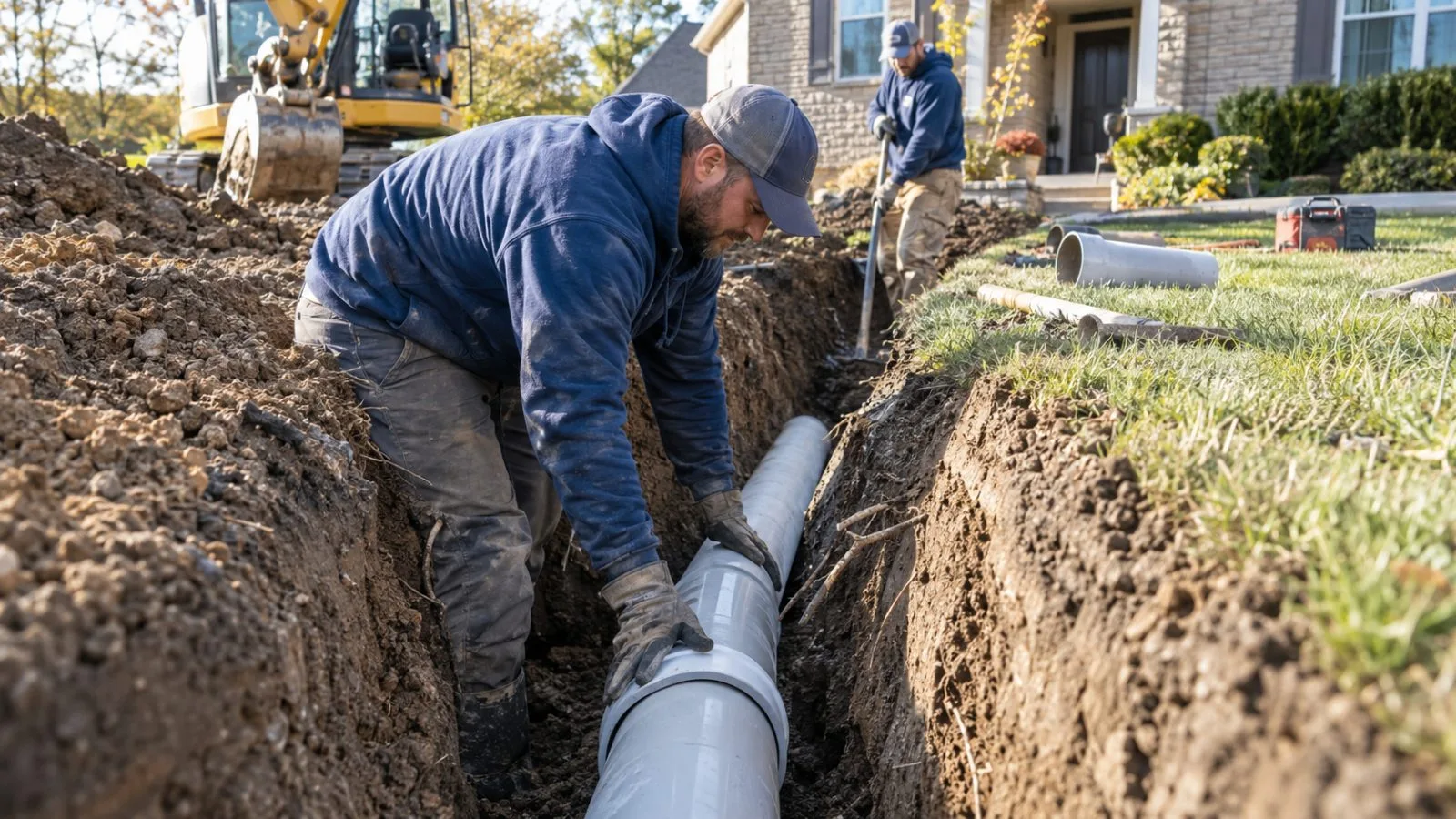
The sewer repair process in Fort Wayne
Start with the symptoms and location, establish the defect, then agree on the method, permissions and restoration before the contractor opens the ground.
Record what changed
Write down the affected fixtures, onset, recent cleaning and weather. Preserve a utility case number if the public system is being investigated. A timestamp can be more helpful than a guess about which pipe failed.
Agree on the inspection
- Agree which access the inspector will use and identify the direction it can examine.
- Mark the question the inspection must answer before the repair can be priced.
- Ask for a copy showing the access point and the farthest visible section.
- Record the next decision if standing water or a restriction blocks further inspection.
Triage a backup before requesting excavation
When wastewater is actively entering a building, keep occupants away from the affected space. If it can be done safely, stop using fixtures that add water to the system. A flooded basement with electrical equipment is not a place to collect a better photograph. An immediate threat to life needs emergency assistance. An estimate request is a way to organize a project, and arrival must be confirmed with the responding provider.
Record whether the lowest fixture reacted when a different fixture emptied. Note when the problem began and whether another building reported a similar change around the same time. The city may need to check a public sewer, while an individual building may need a private inspection. Tell each party what you actually observed and preserve both responses. An assumption about responsibility at this stage can send the wrong person to the site.
Make the camera recording usable
A useful camera record begins with a location. Ask the person making the inspection to identify the building, the access point and the direction of travel. Keep the original recording if available. A still picture of a cracked wall can show damage but leave out the path taken to reach it. A measurement on the screen is of little use to another provider without a known starting point.
If debris or standing water affects what can be seen, ask the inspector to record that limitation. A report can reasonably identify a restriction and stop there. It should distinguish visible damage from assumptions about the unexamined length. When a proposal includes work past the end of the recording, ask how the contractor determined the additional scope.
Request a simple explanation of what lies immediately upstream and downstream of the suspected defect. For a joint repair, the adjoining sections help define sensible endpoints. For a longer replacement, note changes in pipe size, direction or material and visible branch connections. Keep those observations with the video instead of relying on the property owner's memory during a second estimate.
Turn a footage reading into a site location
The distance a camera travels through bends does not automatically give a reliable straight line across a yard. Ask the provider how it located the defect on the surface and how it estimated the depth. If the proposal describes an opening beside the driveway, find out whether the locate refers to the joint itself, the last spot reached by the camera or the best available access to perform the repair.
A photo taken from a safe location can preserve a mark in relation to a fixed feature such as a garage corner. A rough sketch can identify a gate, a retaining wall, the direction of the street and the line believed to serve a second structure. Do not place your own marks where they could be confused with utility locates. Ask the person responsible for the job to explain which markings the work will rely on.
Compare the limits of two written proposals
Read each proposal from the first point of work to the last. If one ends at an existing coupling in the lawn and the other continues beneath a sidewalk, the quoted totals cover different jobs. Ask each bidder to state the expected repair length, how they selected the endpoints and which sections will remain in service. Identify whether the existing camera evidence covers all of those sections.
List every surface the contractor expects to disturb and write down its condition before work. An allowance for backfill may leave a paved surface, a landscape bed or a sidewalk for another contractor. For a shared drive, ask who will notify other users and when dependable access must be restored. A description such as “restore site” is easier to evaluate when it names the final material and the responsible party.
Separate the terms of the work from instructions for approving a change. If the excavation reveals an additional failed joint, the owner needs to know what the contractor found, which price items change and who can approve the revised work. A tenant with keys may be able to admit the crew without having authority to accept the change.
Arrange locates and property access
Indiana 811 asks for location details, the proposed excavation area and the identity of the party doing the digging. The excavator should explain who will submit the request and check the responses. Indiana 811 also explains the difference between facilities marked by member utilities and privately installed lines. Mention privately installed power to an outbuilding, irrigation equipment and any other known facilities in the proposed work area.
Keep site-access permission separate from the locate process. A utility marking does not grant permission to cross a neighbor's lawn or occupy a street. If a proposed opening extends onto shared land, ask the provider which owner or authority must approve it. For a repair near a public connection, check the serving utility's requirements before relying on a contractor's proposed start date.
Indiana 811 homeowner guidance on marking, private facilities and positive response
Plan the interruption for people using the property
Ask when occupants must stop using fixtures, which fixtures are affected and who confirms that they can be used again. Record the provider's contact arrangements for that period. In an occupied rental, give the property manager enough detail to notify the residents who are actually affected. A common connection serving two units can require coordination beyond the room where the first backup appeared.
Tell the provider about access needs before equipment arrives. A work area can affect deliveries, parking, assisted entry or an essential route out of the building. The contractor determines how to set up the site safely. The owner can identify which routes people rely on, where pets will be kept and who will meet the provider if the expected access point is locked. Keep children and visitors clear of an excavation throughout the visit.
Review inspection and restoration before closing the file
Ask how the provider checked the completed section and what remained outside the agreed work. Where an authority requires an inspection before covering the installation, ask for the inspection reference and the person responsible for obtaining it. The owner should be able to distinguish the contractor's own completion check from approval issued by a utility or permitting office.
Before the crew leaves, reconcile the original scope with approved changes and the condition of the finished surface. If paving, turf or final grading will be completed later, obtain the responsible contact and the agreed arrangement in writing. Keep the invoice with the report, any terms supplied by the contractor and the location of the new joints. Those records can prevent a later blockage elsewhere on the run from being mistaken for a failure inside the repaired section.
Keep a one-page property record
| Record | What makes it useful at the next visit |
|---|---|
| Camera file | Property location, entry point, direction, date and inspection limits. |
| Scope sketch | Repaired endpoints, untouched sections, depth information and the agreed surface finish. |
| Permission record | Name of the issuing office, reference and inspection result when required. |
| Closeout contact | The company named on the contract and the process it provided for follow-up. |
Store the file where a future owner or manager can identify the property. If another provider later recommends work, ask them to show where the new finding lies in relation to the repaired segment. That comparison is often more informative than comparing two dates or two footage readings in isolation.
Set the scope
| Evidence | Decision to discuss |
|---|---|
| A video stops at an obstruction | Locate the stopping point and establish what lies beyond it before deciding on replacement. |
| One damaged joint is visible | Check the adjoining pipe, depth and access for a limited opening. |
| Multiple sections have defects | Compare the proposed endpoints and the remaining serviceable length. |
| A usable pipe runs below paving | Evaluate a lining or replacement method alongside paving restoration. |
Arrange access and permissions
Confirm how the inspection becomes a written proposal, who will request marked utilities and who controls work at the public connection. If occupants must stop using fixtures, agree who gives them notice.
Indiana 811 private-facility guidance · Fort Wayne utility rules
Plan the handover
| Stage | Record before moving on |
|---|---|
| Site review | Location, service authority and access limits |
| Diagnosis | Video or other documented findings |
| Authorization | Agreed scope, exclusions and change process |
| Installation | Connection details and required inspections |
| Completion | Return-to-use instructions and restoration responsibilities |
Review the completed work
Keep the repaired length and material with the original investigation. The next contractor can use those endpoints to establish whether a later symptom occurs inside or beyond the work.
Frequently asked questions
What can a provider decide before coming to the property?
It can review your description and existing reports, identify likely access requirements and discuss an inspection arrangement. Ask which decisions can wait for the camera findings and which agreement authorizes the initial visit.
How do I record the limits of an incomplete inspection?
Request the access point, direction traveled, last clear frame and the reason progress stopped. Ask the inspector to show the unseen section on the sketch and identify what a second visit or another opening could establish.
When should a repair method be selected?
Select a method after the provider identifies the defect and the proposed endpoints. If part of the pipe is inaccessible, discuss a staged decision and establish what further findings would change the method before committing to the remaining work.
Who tells residents when they can use fixtures again?
Ask the contracting provider to name the contact who can authorize return to use. Have the owner or manager pass those instructions to occupants, including anyone using a shared branch or bathroom.
What if the opening reveals damage beyond the agreed length?
Ask for the new finding, an updated plan, the additional work and any change in restoration. Confirm who can authorize the revision. Keep the initial proposal and the dated change together.
What record closes out an inspection and repair?
Request the final limits, the connection positions, any verification promised in the proposal and a list of remaining surface work. Verify who will finish each outstanding item and when a follow-up is needed.